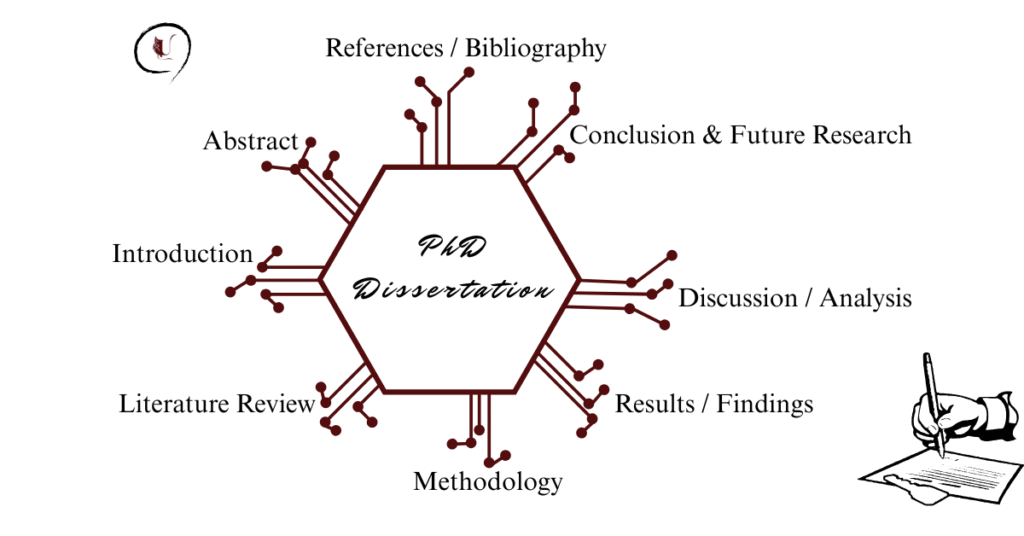
A PhD dissertation is the pinnacle of academic research. A document that demonstrates years of study, your original contribution, and critical analysis. Yet, one of the biggest challenges PhD scholars face is understanding the structure of a dissertation. If you are starting your doctoral journey or polishing your final draft, this guide will explain the PhD dissertation structure step-by-step, from introduction to conclusion.
Why Dissertation Structure Matters
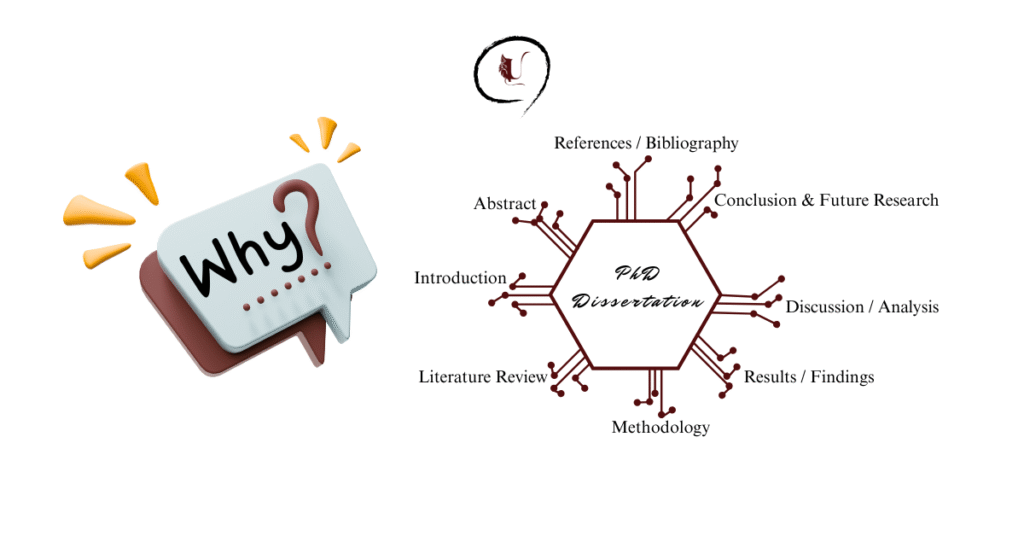
A well-structured dissertation is not just about organization; it helps you:
- Communicate your research clearly.
- Satisfy university and academic committee requirements.
- Increase the chances of publication in reputable journals.
Think of your dissertation as a story. Each section plays a role in guiding the reader through your research journey.
Typical PhD Dissertation Structure
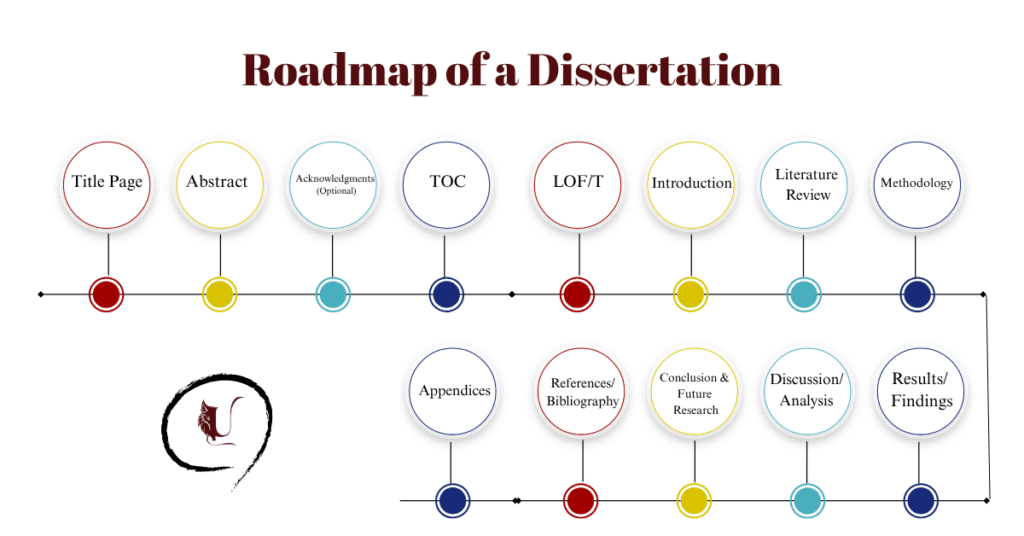
While different universities may have slight variations, most PhD dissertations follow this structure:
- Title Page
- Abstract
- Acknowledgments (Optional)
- Table of Contents
- List of Figures and Tables (if applicable)
- Introduction
- Literature Review
- Methodology
- Results / Findings
- Discussion / Analysis
- Conclusion & Future Research
- References / Bibliography
- Appendices
Let’s explore each part in detail.
Title Page

The title page is the first impression of your dissertation. It should be clear, academic, and concise. Avoid long or vague titles; instead, focus on specificity and keywords that reflect your research. What to include:
- Dissertation title (clear and descriptive)
- Your full name
- Degree program
- Institution name
- Date of submission
Example Title: Artificial Intelligence in Healthcare: A Study on Predictive Analytics for Early Disease Detection
Ensure your title includes keywords relevant to your research, as many academic repositories index titles for discoverability.
Abstract
The abstract (usually 250–350 words) is one of the most read sections of your dissertation. It provides a summary of the entire research:
- Research problem
- Objectives and methods
- Key findings
- Contribution to knowledge
Write this last, but place it first in your dissertation.
Since academic databases like ProQuest and Google Scholar index abstracts, make sure it contains strong keywords related to your field.
Acknowledgments (Optional)
The acknowledgment section allows you to thank:
- Supervisors and academic mentors
- Funding agencies or institutions
- Friends, colleagues, and family
Although optional, acknowledgments add a human element to your dissertation.
Table of Contents (TOC)
Your TOC should be automatically generated in Word or Google Docs to maintain accuracy when page numbers shift. Include:
- Chapters and sections
- Tables and figures (if required)
- Appendices
A neat TOC helps examiners quickly navigate your work.
Introduction
The introduction sets the stage for your dissertation. Here, you must clearly state:
- What your research is about
- Why it matters (academic and practical significance)
- Your objectives, research questions, or hypotheses
Checklist for a strong introduction:
- Context of the study
- Problem statement
- Research gap
- Hypothesis/research questions
- Expected contribution
Literature Review
The literature review demonstrates that you:
- Understand existing theories and debates
- Can critically analyze previous research
- Have identified gaps in knowledge your study will fill
Structure it thematically, not as a list of summaries. Compare, contrast, and evaluate sources.
Methodology
The methodology chapter answers the “how” of your research. It should be detailed enough for another scholar to replicate your study.
What to include:
- Research design (qualitative, quantitative, or mixed)
- Data collection methods (interviews, surveys, experiments, case studies)
- Sampling strategy
- Tools or instruments used
- Ethical considerations
- Limitations of your approach
Justify why your chosen methods are the most appropriate for your research question.
Results / Findings
Here you present the raw findings without interpretation. Use:
- Tables
- Charts
- Graphs
- Visual aids to simplify data presentation
Keep it objective, save analysis for the Discussion section.
Discussion / Analysis
In the discussion, you move from “what” you found to “why” it matters.
- Interpret findings in light of your research questions
- Compare results with existing literature
- Discuss theoretical and practical implications
- Highlight unexpected outcomes
- Acknowledge limitations
Frame your findings in a way that shows original contribution to the field.
Conclusion & Future Research
The conclusion ties everything together. It should:
- Summarize your research contributions
- Highlight the significance of your findings
- Suggest directions for future studies
Example Future Research Direction
“This study advances AI in healthcare but recommends longitudinal studies to assess real-world outcomes.”
References / Bibliography
Proper citation is essential for academic credibility. Always follow your university’s required style guide (APA, MLA, Harvard, or Chicago). Use tools like:
- Zotero
- Mendeley
- EndNote
- MyBib
Appendices
Appendices hold supplementary material:
- Survey questionnaires
- Raw data
- Interview transcripts
- Additional graphs or tables
These support your dissertation but do not interrupt the main flow of the document.
Visual Roadmap of a Dissertation
Final Thoughts
Writing a PhD dissertation is a marathon, not a sprint. By breaking it into manageable sections (from introduction to conclusion), you can approach the process with confidence and clarity. Remember:
- Be clear and precise
- Stay original
- Contribute meaningfully to your field
With the right structure, your dissertation won’t just be a requirement; it will be a scholarly achievement that stands the test of time.